When the power cuts out in the middle of the working day, what actually happens in your building? Do people calmly follow the glowing exit signs… or freeze in dark corridors, unsure where to go?
Emergency lighting is one of those things you don’t notice when it’s working – but you’ll definitely notice when it’s not. For businesses across Southland and Central Otago, reliable emergency lighting is a critical part of your fire safety and evacuation planning, not just a box to tick.
Why Emergency Lighting Matters More Than You Think
When the Lights Go Out – What Actually Happens?
When mains power fails, people instantly lose visual cues – doors, stairs, obstacles, and exit routes all become harder to see. That’s when panic, bottlenecks, and injuries can happen.
Emergency lighting gives you precious clarity in those first few moments. It keeps escape routes visible, highlights exits, and helps staff, customers, and visitors move to safety quickly. Think of it as your building’s “backup vision” – when everything else goes dark, it guides people out.
Legal and Safety Expectations in New Zealand Workplaces
In Aotearoa, businesses have a duty of care to provide a safe workplace. That includes having a clear evacuation plan and the right life-safety systems in place – emergency lighting is a key part of that.
If your building is used by the public, has multiple levels, or relies on internal corridors and stairwells, emergency lighting isn’t just nice to have; it’s essential. Beyond compliance, it’s about being able to look your team in the eye and confidently say, “If something goes wrong, we’re ready.”
Key Types of Emergency Lighting (And Where You Need Them)
Exit Signs vs Emergency Lights – What’s the Difference?
A lot of people mix these up, but they do different jobs.
- Exit signs show where to go.
- Emergency lights help you see the path.
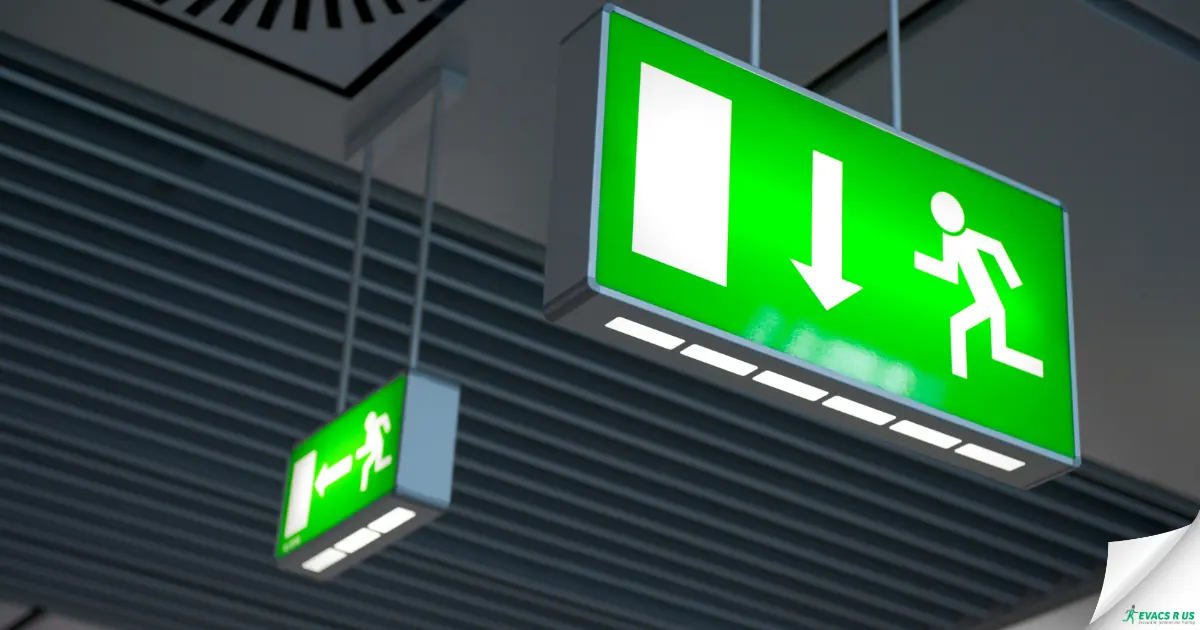
Exit signs are those illuminated green signs with arrows or the “running man.” Emergency lights, on the other hand, switch on during a power cut to light your escape routes. You need both: signs to show direction, lights to make escape safe.
High-Risk Areas
Not every corner of your site carries the same level of risk. Focus first on the spaces where poor visibility could quickly turn dangerous – especially in an emergency.
Stairwells, Corridors, and Assembly Points
Stairwells are non-negotiable. A dark stairwell is a broken ankle waiting to happen.
Long internal corridors, warehouse aisles, plant rooms, and toilet blocks also need reliable emergency lighting. Don’t forget external exit paths leading to your assembly point — people need visibility from inside all the way out.
For Southland and Central Otago, where early winter darkness and rough weather are common, strong external emergency lighting is a major safety advantage.
Keeping Your Emergency Lighting Compliant and Reliable
Regular Testing, Maintenance, and Records
Emergency lighting isn’t “set and forget.” Batteries fail. Fittings get damaged. Layouts change.
Regular testing is crucial to ensure everything works when it’s needed most. This usually includes:
- Quick functional tests
- Full duration tests
- Clear records of checks and maintenance
Think of it like a WOF for your building’s escape routes — a small bit of effort now prevents major issues later.
How Emergency Lighting Fits Into Your Fire Drills & Evacuation Scheme
Emergency lighting is part of your wider evacuation plan. During your fire drills, simulate a power cut and walk the escape route:
- Are there any dark spots?
- Are exits clearly visible?
- Would a new staff member know where to go?
When lighting, signage, and evacuation training work together, evacuation becomes smooth, safe, and predictable — not chaotic.
Need Help? Work With Local Fire Safety Specialists
Unsure if your emergency lighting is up to standard? Many business owners inherit old systems and just hope they’ll work in an emergency — but hope isn’t a safety strategy.
That’s where a trusted local specialist like Evacs R Us makes a real difference.
Evacs R Us supports businesses across Southland and Central Otago to:
- Review and assess their current emergency lighting
- Identify compliance issues or gaps
- Align lighting with fire drills and evacuation schemes
- Improve visibility, escape routes, and overall site safety
If you want a practical, plain-English walkthrough of your building — room by room, exit by exit — get in touch with Evacs R Us. Their experienced team will help you make confident, compliant decisions so your people aren’t left in the dark when it matters most.