Workplace safety technology has evolved rapidly over recent years. For decades, the gold standard for workplace fire readiness was standard classroom theory paired with a live-burn demonstration in a vacant parking lot. Today, digital simulation platforms offer a high-tech alternative.
Health and safety managers, business owners, and HR professionals are carefully weighing these modern options. A common question arises when planning a safety budget: is VR fire training as effective as live fire training?
The short answer is that Virtual Reality (VR) is highly effective, and in many most specific scenarios, it actually outperforms traditional live-burn exercises. Rather than viewing VR as a lesser substitute, modern emergency professionals see it as a powerful tool that delivers specific advantages live fires simply cannot match.
Comparing the Two Methods Side-by-Side
To understand which methodology fits your organisation best, you need to look at how they perform across different environments. Both approaches aim to build muscle memory, but they do so through different means.
| Feature | Live Fire Training | VR Fire Training |
| Sensory Realism | Real heat, smoke, and physical smells | Photorealistic 3D visuals and spatial sound |
| Scenario Variety | Usually limited to a small liquid fuel pan or LPG prop | Kitchens, electrical rooms, offices, warehouses, vehicles, machinery, fuel fires |
| Environmental Impact | Produces smoke emissions and potential chemical waste, depending on the extinguisher type | 100% eco-friendly with zero carbon emissions |
| Setup Space Needed | Large, open outdoor area away from structures | A standard indoor boardroom or training space approximately 4m2 |
| Repeat Attempts Cost | High (paying for extra extinguisher refills) | Zero (unlimited resets in the alloted time at no extra cost) |
Where Virtual Reality Takes the Lead
While extinguishing a controlled real fire provides undeniable sensory feedback, traditional live training has major logistical limitations. VR fire training addresses these constraints directly, providing several distinct operational benefits.
1. Unlimited Resets with Zero Extra Cost
In a traditional live training session, physical resources are strictly limited. Once a real fire extinguisher is discharged, it is empty. If a trainee makes a mistake, freezes up, or wants to practice the technique a second or third time, you have to pay for additional extinguisher units or commercial cylinder refills.
Virtual reality completely removes this financial barrier. If a staff member fails to suppress the digital flames on their first attempt, the instructor can hit reset instantly. Trainees can redo the exact scenario as many times as they need during their training course to build genuine confidence, without running out of resources or adding extra fees to your training budget.
2. Unlimited, Complex Emergency Scenarios
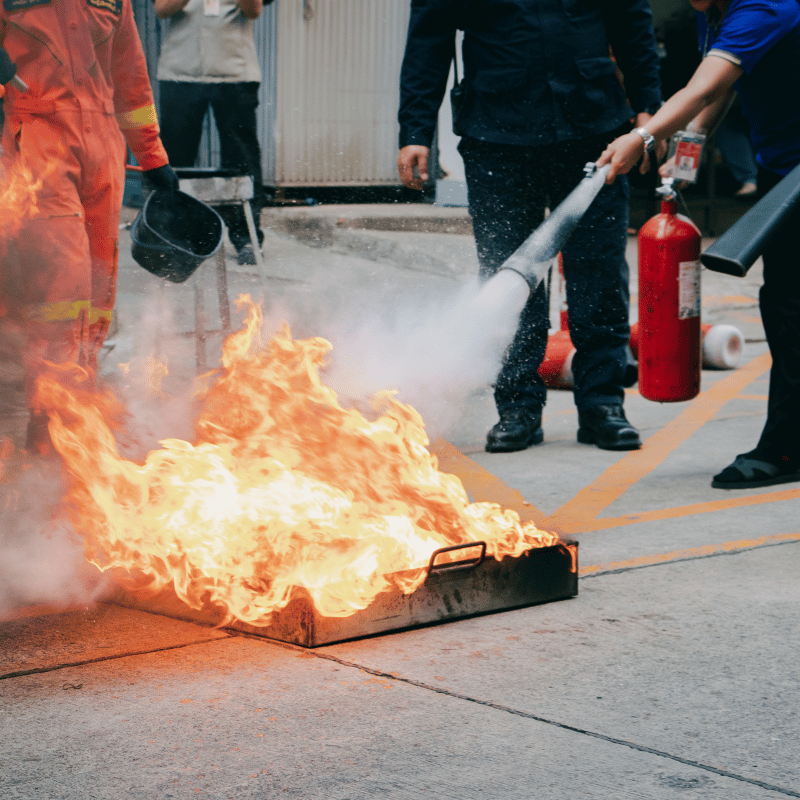
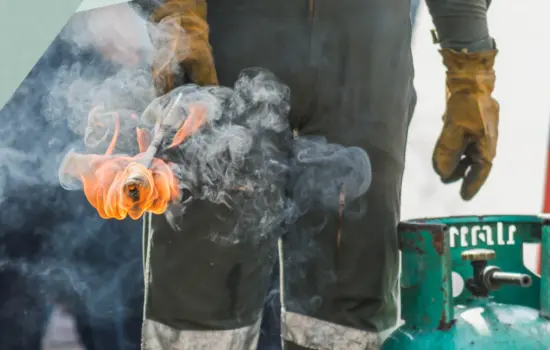
In a typical live-fire exercise, staff practice using an extinguisher on a simple metal tray of burning fuel on the ground or an LPG prop. A real workplace emergency rarely looks like that.
With a VR headset, trainees can be immersed in a photorealistic office building, a complex manufacturing floor, or a commercial kitchen. They must instantly identify whether they are facing a chemical spill, a server rack electrical fire, or a paper blaze, forcing them to select the correct extinguisher type before the digital flames spread up the virtual walls.
3. A Completely Safe Learning Environment
Mistakes are an essential part of the learning process, but making a mistake with an actual roaring fire can be dangerous. If a trainee panics, drops the extinguisher, or approaches a real fire from the wrong angle, there is an immediate risk of injury or smoke inhalation. In a virtual environment, a user can fail safely, reset the scenario instantly, and try again until they get it right.
4. Eco-Conscious and Weather-Independent
Traditional outdoor live-burn exercises can produce chemical runoff from fuels, extinguishing agents and smoke emissions. They are also entirely at the mercy of our local weather patterns. If a sudden storm or high winds hit your area, outdoor training may have to be cancelled. VR training takes place entirely indoors, meaning your safety schedule remains uninterrupted regardless of the weather outside.
The True Power: Combining Tech with Real Field Knowledge
Despite the incredible advantages of digital simulations, the absolute best safety outcomes are achieved when technology is guided by real-world field experience. A simulation program is only as good as the instructor facilitating the session.
At Evacs R Us, we don’t focus on purely hypothetical situations. Our entire team consists of current and former emergency services professionals and firefighters who bring genuine, firsthand field knowledge into our training rooms. We provide practical, cost-effective, and deeply immersive learning solutions across Southland, Central Otago, and the Lake District.
We utilise high-tech VR fire training environments to ensure your team is thoroughly prepared for any emergency.
Upgrade Your Workplace Safety Training Today
So, is VR fire training as effective as live fire training? It is an incredibly powerful, versatile, and safe method that prepares your team for realistic workplace scenarios that live pans cannot simulate.
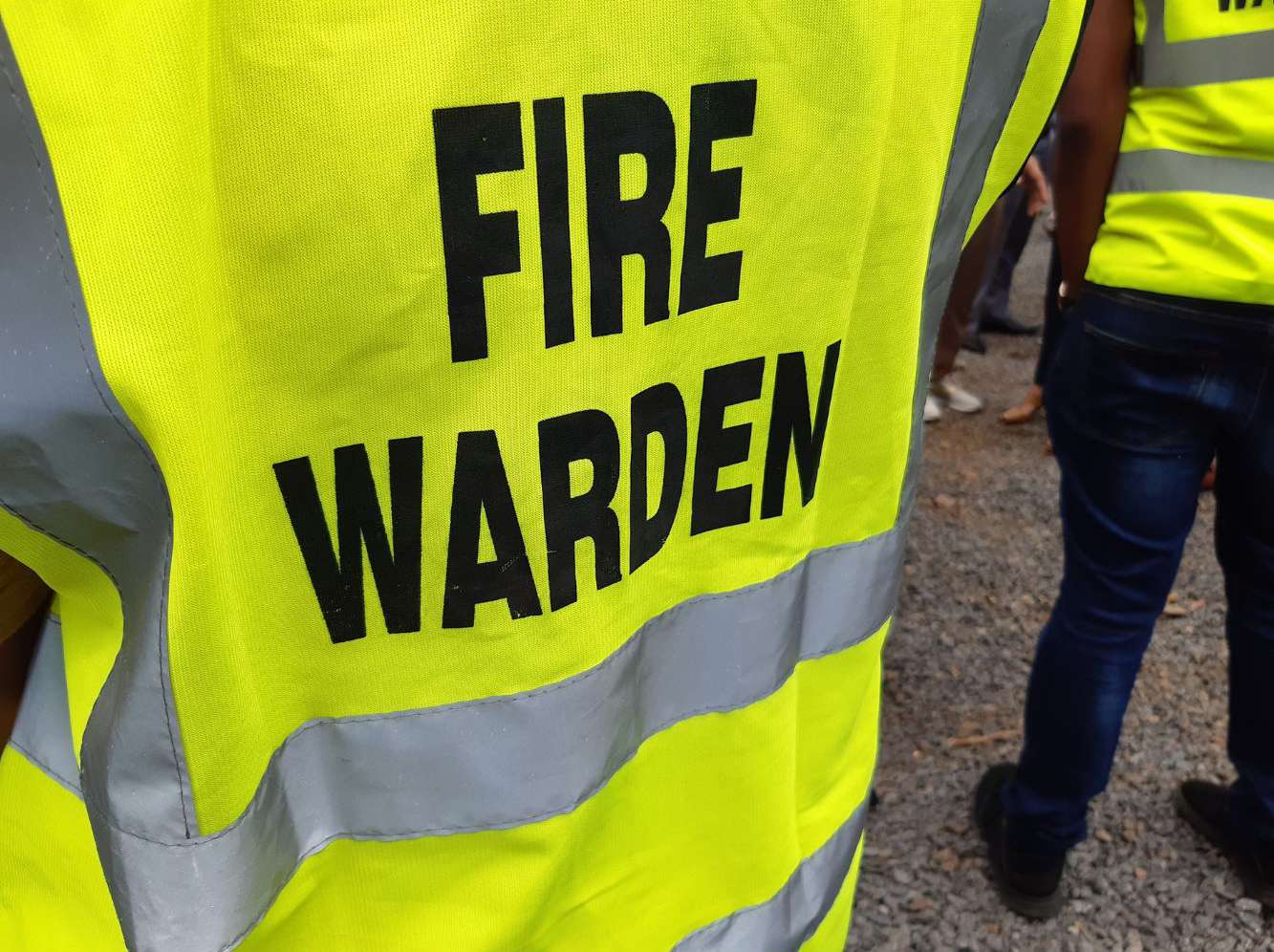
Whether your team needs a routine refresher, customised Fire Warden training, or an update to your formal FENZ-approved evacuation scheme, our local specialists will design a program tailored directly to your building layout.
Equip your workforce with the skills, confidence, and knowledge required to act decisively when a critical moment strikes. Contact Evacs R Us today to discuss our practical training solutions or book a session for your business.