Fire Extinguisher Maintenance Guide

Imagine a scenario, smoke starts curling from your kitchen stove. Panic sets in, but you remember the fire extinguisher hanging conveniently beside the stove. Grabbing it, you rush towards the flames, only to find the pressure gauge in the red zone and the pin firmly lodged – a useless lump of metal in your hand. This is the chilling reality of an unmaintained fire extinguisher.

Fire extinguishers are the first line of defence in any fire emergency. They can mean the difference between containing a small blaze and facing a raging inferno. Yet, many Kiwi homes and businesses treat these crucial safety devices as mere decorations, neglecting the importance of regular maintenance and inspections.

Just like your car needs servicing to run smoothly, fire extinguishers require regular check-ups to ensure they’ll perform flawlessly when you need them most. Think of it this way: if your smoke alarm starts chirping incessantly in the middle of the night due to a low battery, you replace it immediately. Why wouldn’t you take similar precautions with your fire extinguisher, the very tool designed to extinguish a blaze?

Let’s delve deeper into the potential consequences of neglecting fire extinguisher maintenance and explore the benefits of regular inspections and professional servicing.

Pot on stove with flames coming form the bottom


The Pitfalls of Neglect: Why Regular Fire Extinguisher Maintenance Matters

Fire extinguishers are not invincible. Over time, or due to improper handling, several issues can arise that render them ineffective in an emergency. Here are some common problems that can occur with an unmaintained extinguisher:

  • Leaky Seals: The pressure within a fire extinguisher is what propels the extinguishing agent. Leaky seals can cause the extinguisher to lose pressure, rendering it useless. Imagine trying to fight a fire with a limp water hose – that’s essentially what you’d be doing with a leaky extinguisher.
  • Malfunctioning Gauges: The pressure gauge on a fire extinguisher is a vital indicator of its functionality. A faulty gauge might display a false reading, giving you a false sense of security. In the worst-case scenario, it might not register a pressure drop due to a leak, leaving you completely unaware of the extinguisher’s compromised state.
  • Clogged Nozzles: The nozzle of a fire extinguisher is where the extinguishing agent is discharged. Without regular maintenance, dust, debris, or even corrosion can build up and clog the nozzle, preventing the agent from being properly expelled.
  • Internal Damage: Even minor bumps or drops can cause internal damage to an extinguisher, compromising its ability to function properly. Regular inspections can identify such issues before they become a problem.

These are just a few examples, and a faulty extinguisher can not only fail to extinguish a fire, but it can also worsen the situation. A malfunctioning extinguisher might create a false sense of security, delaying evacuation or proper firefighting measures. In the precious moments of a fire emergency, every second counts. Don’t gamble with a faulty extinguisher – prioritise regular maintenance and inspections.
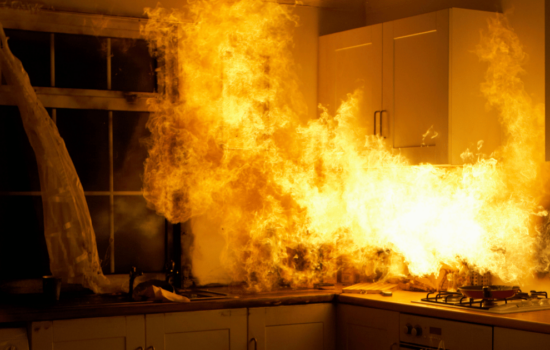
Kitchen well ablaze


Regular inspections offer several benefits:

  • Early Detection of Issues: A professional can identify potential problems before they escalate, preventing a malfunction during a fire emergency.
  • Compliance with Regulations: In New Zealand, workplaces are required to have their fire extinguishers inspected and maintained at regular intervals. Inspections ensure compliance with these regulations.

Remember, a well-maintained extinguisher is your first line of defense in a fire emergency. Don’t wait until it’s too late – take action today!

At Evacs R Us, we understand the importance of fire preparedness and the role fire extinguishers play in keeping you and your loved ones safe. If you have any questions or concerns about fire extinguishers, inspections, or general fire safety practices, don’t hesitate to contact our team of experts. We’re here to equip you with the knowledge and resources you need to face any fire emergency with confidence.
Book with us

You can book your course directly online through our online booking system. Simply pick your course, the number of people attending, and the desired dates to book a course time.
Book Fire Suppression Image

Book Fire Suppression

Book Fire Warden Image

Book Fire Warden

Book Fire Warden Image

Book Trial Evacuation


    Please take a note: Price is included in your Monthly Maintenance or by arrangement.

    Beyond Installation – The Importance of Fire Alarm System Compliance Checks

    Among the various components of fire safety, a fire alarm system can play a crucial role in detecting and alerting occupants in the event of a fire emergency. However, just installing a fire alarm system is not enough; regular testing, compliance inspections, and servicing are essential to ensure their effectiveness.

    Regular testing helps identify any faults or malfunctions in the system, ensuring that it operates optimally when needed the most. Moreover, compliance with local regulations and standards mandates regular testing to meet safety requirements. By conducting routine tests, false alarms can also be minimised, reducing disruptions and ensuring a timely response to genuine emergencies.

    Think of a fire alarm as a silent guardian, constantly on watch for the invisible threat of smoke. Here’s why they are so important:

    • The Silent Threat: Smoke Inhalation – Fires are often more dangerous for the smoke they produce than the flames themselves. Smoke inhalation can quickly render you disoriented and unconscious, making escape nearly impossible. A functioning fire alarm provides the precious time needed to evacuate safely.

    • Early Warning Can Save Lives – Every second counts in a fire. A properly functioning fire alarm will alert you to danger early on, giving you valuable time to get yourself and your loved ones out of harm’s way.

    Fire Alarm Functionality: Ensuring They Work When You Need Them Most

    Just like any other piece of equipment, fire alarms require regular care to function optimally. Here’s how to ensure they’re ready to work when you need them to:

    • Regular Testing: Uncovering Hidden Issues – Scheduled testing, often monthly or quarterly, helps identify potential problems before they become critical. This could include anything like faulty sensors, wiring issues or low battery levels.

    • Addressing Malfunctions: Proactive Maintenance – Regular testing isn’t just about identifying issues; it’s about fixing them promptly. By addressing malfunctions proactively, you can prevent a minor problem from escalating into a major safety hazard.

    Fire Alarm System Compliance Inspections: Peace of Mind and Meeting Legal Obligations

    Fire alarm systems are not installed randomly or to follow the latest interior design trend. They need to adhere to strict building codes and safety regulations set out in the New Zealand Building Code. Compliance inspections ensure your system meets these requirements, such as:

    • Meeting Building Codes and Safety Regulations – Compliance inspections verify your fire alarm system aligns with the New Zealand Building Code, ensuring your building meets legal safety standards.

    • Avoiding Fines and Legal Liabilities – Non-compliance with fire safety regulations can result in hefty fines and even legal repercussions in the event of a fire. Regular inspections help you stay on the right side of the law.

    The responsibility for fire safety doesn’t fall solely on one person’s shoulders. Here’s how different parties can work together:

    • Building Owners’ Responsibilities – As a building owner, it’s your legal responsibility to ensure your fire alarm system is regularly tested, inspected, and serviced by qualified professionals as part of your Building Warrant of Fitness (BWoF). This includes scheduling appointments with certified fire service providers and maintaining records of completed work.

    • Choosing a Qualified Company – Not all fire service providers are created equal. Look for a company with a proven track record, qualified technicians, and certifications from relevant regulatory bodies.

    Best Practices for Fire Safety

    Beyond testing and servicing fire alarm systems, adopting comprehensive fire safety measures is crucial. Educating occupants about fire safety procedures, conducting regular fire drills, and developing an approved evacuation scheme are integral parts of a robust fire safety strategy. By fostering a culture of safety within buildings, the risk of fire incidents can be significantly reduced.

    If you have any doubts or questions regarding fire alarm testing, compliance inspections, or servicing, don’t hesitate to contact Evacs R Us. Our team of experts are dedicated to ensuring the safety and security of your premises. Whether you need clarification on regulatory requirements or guidance on best practices for fire safety, we’re here to help.

    Book with us

    You can book your course directly online through our online booking system. Simply pick your course, the number of people attending, and the desired dates to book a course time.
    Book Fire Suppression Image

    Book Fire Suppression

    Book Fire Warden Image

    Book Fire Warden

    Book Fire Warden Image

    Book Trial Evacuation


      Please take a note: Price is included in your Monthly Maintenance or by arrangement.

      Understanding the Costs of a Fire and Safety Course in New Zealand

      Business that has been devastated by fire.
      Keeping your staff and customers safe should be high on the priority list. Fire safety training is a crucial element of workplace safety, but for Kiwi business owners, it can sometimes feel like a significant expense. This begs the question: why is a fire and safety course in New Zealand be so expensive?

      Before diving into the cost factors of a fire and safety course in New Zealand, let’s establish the undeniable importance of fire safety training.

      • Legal Requirements: In New Zealand, the Health and Safety at Work Act 2015 mandates that employers provide a safe working environment for their employees. This includes fire safety training that meets specific industry standards. Failure to comply can result in hefty fines and even prosecution.
      • Moral and Ethical Responsibility: Beyond legal obligations, business owners have a moral and ethical responsibility to ensure the safety of their staff. Fire can have devastating consequences, and proper training empowers employees to react effectively in an emergency situation.
      • Benefits Beyond Compliance: Fire safety training goes beyond simply ticking a compliance box. It fosters a culture of safety awareness within your organisation, leading to a more vigilant workforce. Trained employees can identify potential fire hazards, use fire extinguishers correctly, and safely evacuate the premises during a fire. This minimises potential damage and in some cases, loss of life.

      Factors Contributing to the costs of a Fire and Safety course in New Zealand

      One of the primary factors contributing to the expense of fire training is personnel costs. Hiring qualified trainers or outsourcing training programs can incur significant expenses. Additionally, the need to allocate employees’ time for training sessions can impact productivity.

      Equipment and material costs also add to the overall expense. From fire extinguishers to protective gear, ensuring that participants have access to the necessary tools during training sessions requires financial investment. Furthermore, maintaining and replacing equipment adds to the long-term costs.

      Venue and facility costs are another consideration. Depending on the size of the organisation, finding suitable locations for training sessions can be challenging and expensive. Renting training facilities or arranging off-site training adds to the overall expenditure.

      Class Size and Location

      Larger training classes generally cost less per person than smaller, personalised sessions. However, larger groups can limit individual attention and interaction. Training location also plays a role, with sessions held outside your workplace often incurring additional venue rental costs.

      Regulatory Compliance

      Regulatory requirements regarding fire safety vary depending on the industry and location. Businesses must adhere to specific standards and guidelines, which often necessitate specialised training programs. Meeting these regulations incurs costs for training materials, certifications, and compliance audits.

      Specialised Training Programs

      Certain industries require specialised fire training and evacuation schemes to address unique risks and challenges. For example, healthcare facilities may need training on evacuating patients with mobility issues, while industrial plants may require instruction on handling hazardous materials. These tailored programs come at a higher cost due to their specialised nature.

      Training Frequency

      Fire training is not a one-time event; it requires regular refreshers and updates to ensure that skills remain sharp. Frequent training sessions mean recurring costs for both training materials and personnel time. However, the benefits of ongoing training in reducing the risk of accidents and improving response times outweigh the expenses. Think of fire training as an investment into your business.

      The True Cost of Not Having Fire Training


      While the upfront cost of fire training may seem daunting, consider the true cost of not having it:

      • Financial Penalties and Legal Issues: Non-compliance with fire safety regulations can result in hefty fines and potential prosecution. This can be a significant financial burden for your business.

      • Property Damage and Business Disruption: A fire can have a devastating impact on your business, causing extensive property damage and disrupting operations for weeks or even months. The cost of repairs lost inventory, and business downtime can far outweigh the investment in fire training.

      • Potential Loss of Life and Injury: The most tragic consequence of a fire is the potential for loss of life or serious injury. Proper fire safety training empowers your employees to respond effectively, potentially preventing such tragedies.

      • Investing in Peace of Mind: Fire safety training provides peace of mind knowing you’ve taken the necessary steps to protect your employees, customers, and your business. It fosters a culture of safety awareness within your organisation, creating a more secure and productive work environment.

      Fire safety training is an essential investment for any Kiwi business owner. While the cost may seem like a hurdle, the benefits far outweigh the expense when considering the costs of undertaking a fire and safety course in New Zealand. Mitigating risks to ensuring compliance with regulations, investing in comprehensive fire training is essential for safeguarding lives and property.

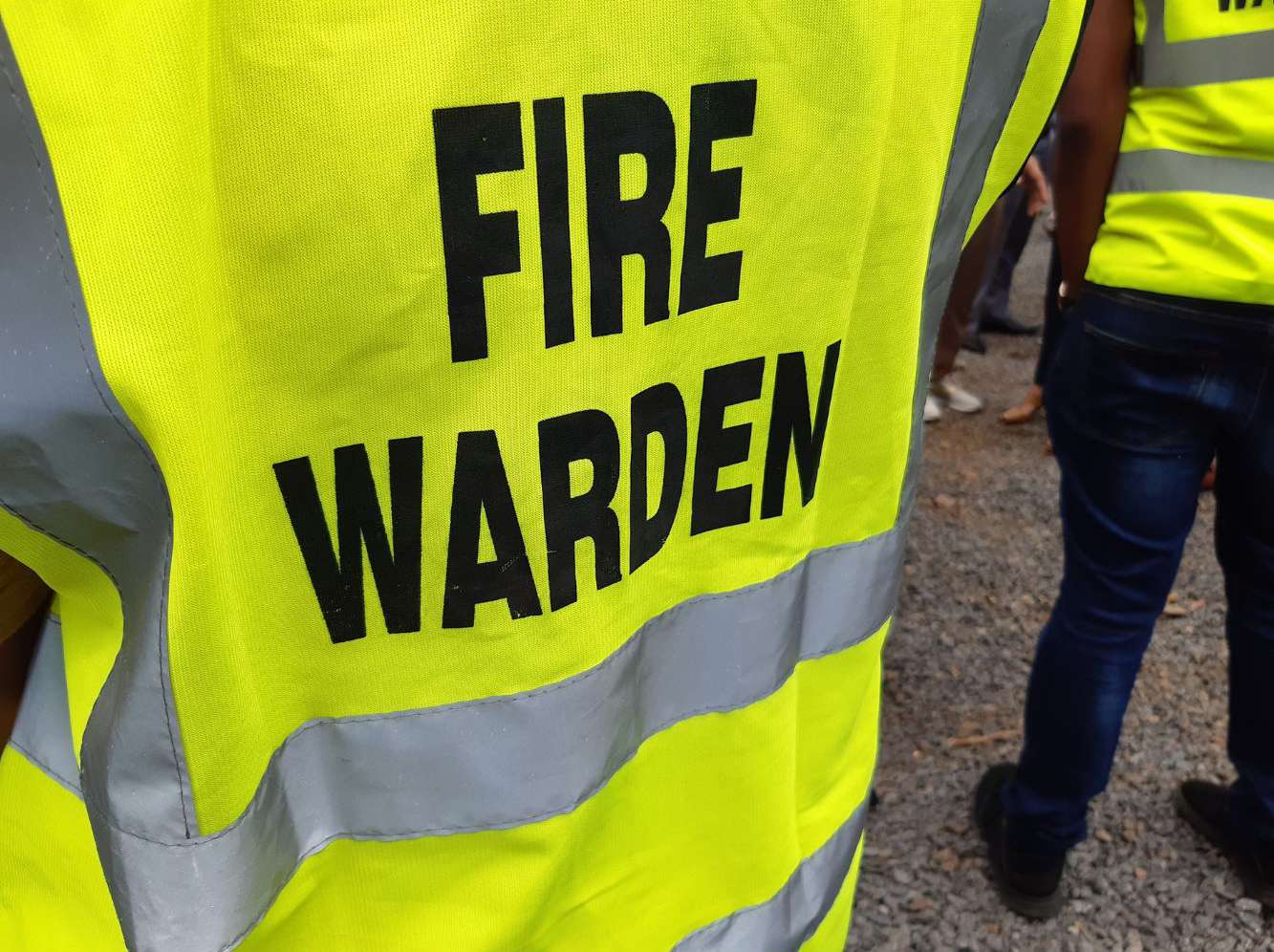
      Remember, fire safety is not just about ticking a box; it’s about creating a safe and secure work environment for everyone. Here at Evacs R Us, we understand the importance of affordable, effective fire training. We offer a variety of fire and safety courses (including Fire Warden training) covering Southland and Otago, tailored to your specific needs and budget. Let our experienced trainers equip your team with the knowledge and skills they need to stay safe.


      Book with us

      You can book your course directly online through our online booking system. Simply pick your course, the number of people attending, and the desired dates to book a course time.
      Book Fire Suppression Image

      Book Fire Suppression

      Book Fire Warden Image

      Book Fire Warden

      Book Fire Warden Image

      Book Trial Evacuation


        Please take a note: Price is included in your Monthly Maintenance or by arrangement.

        5 Reasons You Should Choose Virtual Reality (VR) for Fire & Safety Training

        When it comes to fire and safety training, traditional modes of delivery can only provide so much. The challenges and risks that come with fire emergencies can be overwhelming and require special training that goes beyond classroom instruction. Fortunately, the future of fire and safety training is here in the form of Virtual Reality (VR). This technology presents a new way to learn and prepare responders for real-life scenarios. In this article, we’ll discuss the top 5 reasons why VR technology is the future of fire and safety training and why you should choose it for your organisation’s needs.

        Why Virtual Reality is the Future of Fire and Safety Training


        1. Realistic Scenarios

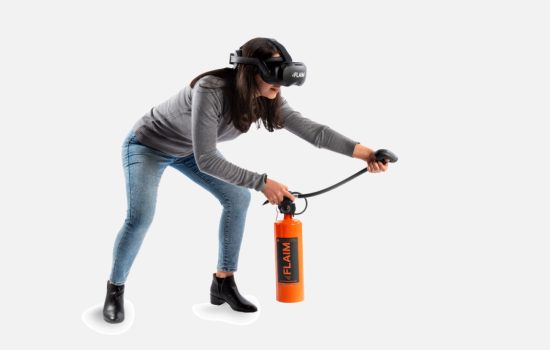
        VR fire training offers immersive experiences that replicate real-life scenarios accurately. This technology allows your employees to train in different virtual environments, including those that would be costly or challenging to create in real-life situations. For instance, you can simulate scenarios, such as fires in confined spaces, offices, construction sites and more. With these types of scenarios such as Virtual Reality fire extinguisher training, you can create realistic experiences that will help your team identify potential hazards and navigate various emergency situations.

        2. Cost-effective

        Training and education can be an expensive part of any organisation’s operations. Traditional training methods can be costly, and live-fire training can be even more so. VR training eliminates the need for costly equipment, safety equipment, and travel costs associated with live-fire training. With VR fire training, trainees can access multiple experiences without leaving the classroom or training centre, which makes it a more cost-effective solution.

        3. Safe Training Environment

        One of the most critical features of virtual reality training is its safety – you can fight fire without the fire! The immersive nature of VR can provide responders a sense of what it is like to experience a fire emergency without the risk of accidents or injuries. This means that trainees can make mistakes without fear of injury or damage to property or life. By providing a virtual training environment, virtual reality technology gives exponentially more options and variations to create real-life emergency scenarios that prepare trainees for the inevitable and challenging life-threatening situations that may present themselves.

        4. Customisation

        One of the key benefits of VR technology is the ability to customise the experience to fit specific training needs. You can design custom scenarios to meet specific training goals and objectives. This makes it easier to tailor training schedules, adapt to new procedures, and accommodate individual needs. It is adaptable to every individual’s needs and allows for individualised instruction.

        5. Ability to Track Progress

        In this style of fire and safety training, advanced analytical software can track the progress of each trainee. Trainers can assess a trainee’s strengths and weaknesses and tailor their training to suit the specific needs of each individual. Trainers can also identify any areas where the trainee might need additional training and focus on improving those areas. This leads to a more informed approach to training and helps ensure that individuals have the knowledge they need to be effective in the field.

        Virtual reality is revolutionising fire and safety training, providing a high-quality training experience that is both safe and immersive. The technology provides customisable and reusable scenarios, dynamic feedback, cost-effectiveness and high retention rates. By providing trainees with the ability to learn from their mistakes in a safe environment, VA fire training is the future of fire and safety training. If you’re looking to provide high-quality training to your organisation that more engaging and fun compared to traditional modes of delivery, contact our team for more information.


        Book with us

        You can book your course directly online through our online booking system. Simply pick your course, the number of people attending, and the desired dates to book a course time.
        Book Fire Suppression Image

        Book Fire Suppression

        Book Fire Warden Image

        Book Fire Warden

        Book Fire Warden Image

        Book Trial Evacuation


          Please take a note: Price is included in your Monthly Maintenance or by arrangement.

          Fire Sprinklers: What sets them off? Understanding the basics

          The sudden activation of fire sprinklers can be a panic-inducing experience, but these sprinkler systems for fire protection are designed to save lives and minimise property damage during a fire. If you are wondering what sets off fire sprinklers? This article will provide you with an overview of the most common activation causes. Let’s dive into the details.

          fire sprinkler

          What sets off fire sprinklers?


          1. Heat

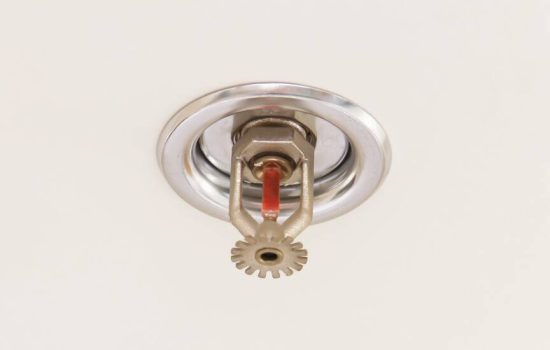
          The most common trigger for fire sprinklers is heat. Sprinklers feature a small liquid-filled glass bulb or a metal alloy link that holds a small amount of liquid in place. When heat from a fire reaches a certain temperature, typically between 55 and 75 degrees Celsius, the liquid expands and causes the bulb to shatter or the link to melt. This opens the valve, allowing water to flow out of the sprinkler.

          Sprinklers do not activate like shown in the movies. The only sprinkler that will flow water is the one that has heat or damage impacted. Sprinklers release approximately 20 litres of water per second, and designers have configured the systems to provide enough water for at least three sprinkler heads simultaneously. If more sprinklers are activated, the system won’t maintain the necessary water capacity to ensure proper pressure and droplet size for containing or extinguishing the fire.

          2. Smoke

          While smoke detectors are responsible for alerting occupants to a fire, they do not activate fire sprinklers. However, some sprinkler systems can be designed to respond to smoke as well. This is more common in specialised systems such as those used in museums or data centres.

          3. Mechanical Damage

          Mechanical damage, such as vandalism or accidental impacts, can also set off fire sprinklers. If a sprinkler head is hit hard enough, the fragile glass bulb can shatter regardless of the temperature.

          4. Corrosion or Wear

          Fire sprinklers are designed to spring into action only during a fire, but they can develop corrosion or wear over time. This can cause the sprinkler head to malfunction and activate even if there is no fire. Regular maintenance and inspections can prevent this from happening.

          5. Malfunctioning Systems

          While rare, it is possible for fire sprinkler systems to malfunction and activate due to a faulty valve or faulty wiring or even water pressure. This again attests to the importance of routine maintenance and inspection of fire systems to prevent unnecessary and costly mishaps.

          While we often hear about fire sprinklers going off accidentally, it’s worth remembering that a well-maintained and trouble-free system can make all the difference in the event of a fire. By understanding what triggers fire sprinklers and ensuring that your system is functioning properly, you can protect your building and its occupants from the devastating effects of fire. Contact our team to ensure a proper inspection and maintenance regime on your premises.

          Book with us

          You can book your course directly online through our online booking system. Simply pick your course, the number of people attending, and the desired dates to book a course time.
          Book Fire Suppression Image

          Book Fire Suppression

          Book Fire Warden Image

          Book Fire Warden

          Book Fire Warden Image

          Book Trial Evacuation


            Please take a note: Price is included in your Monthly Maintenance or by arrangement.

            How Do Fire Doors Work in New Zealand?

            Guardians of Safety: A Closer Look at Fire Doors


            Fire doors are an essential part of some building’s fire safety systems. They are designed to contain fire and smoke and prevent it from spreading to other areas of the building. Fire doors are required in most commercial and residential (mainly apartment) buildings in New Zealand, and they must meet certain standards in order to be effective.

            fire door nz

            What is a Fire Door?


            A fire door is a door that has been specifically designed to resist the spread of fire. Fire doors are made with fire-resistant materials, such as steel, wood, or fibreglass, and they have intumescent seals that expand when exposed to heat to create a tight barrier against smoke and flames.

            Fire Door Standards in New Zealand


            In New Zealand, fire doors must meet the standards set by the Building Code of New Zealand (BCNZ). The BCNZ specifies the fire resistance rating (FRR) that the device must have for different types of buildings. The FRR is a measure of how long a fire door can withstand exposure to fire before it fails.

            For example, fire doors in commercial buildings must have an FRR of at least 60 minutes, meaning that they must be able to withstand exposure to fire for at least 60 minutes before they fail (residential buildings must have an FRR of at least 30 minutes).

            Fire Door Construction


            Fire doors are typically made with a solid core of fire-resistant material, such as timber, fibreglass, or steel. The core is then covered with a facing material, such as veneer or laminate.

            Also, fire doors have intumescent seals around the edges of the door and the door frame. Intumescent seals are made from a material that expands when exposed to heat. This expansion creates a tight barrier against smoke and flames, preventing them from spreading through the door.

            Fire Door Components


            • Door leaf: The door leaf is the main part of the fire door. It is typically made with a solid core of fire-resistant material and covered with a facing material.
            • Door frame: The door frame is the structure that the door leaf hangs in. It is typically made of wood or metal.
            • Intumescent seals: Intumescent seals are made from a material that expands when exposed to heat. They are located around the edges of the door leaf and the door frame to create a tight barrier against smoke and flames.
            • Fire door closer: A fire door closer is a device that automatically closes the door in the event of a fire.
            • Latching mechanism: A latching mechanism is a device that keeps the door closed. It is typically located on the door frame and engages with a strike plate on the door leaf.

            How Fire Doors Work


            Fire doors contain fires and prevent them from spreading to other areas of the building. They do this by using fire-resistant materials and intumescent seals to create a barrier against smoke and flames.

            When a fire occurs, the intumescent seals around the edges of the fire door expand to create a tight barrier against smoke and flames. This prevents the fire from spreading through the door.

            The closer also plays an important role in preventing the spread of fire. The fire door closer automatically closes the door in the event of a fire, preventing the fire from spreading through the doorway.

            Fire Door Maintenance


            Fire doors must be regularly inspected and maintained to ensure that they are in good working order. This includes inspecting the intumescent seals, the fire door closer, and the latching mechanism.

            The intumescent seals should be inspected for any cracks or damage. If the intumescent seals are damaged, they must be replaced immediately.

            The fire door closer should be tested regularly to ensure that it is working properly. The latching mechanism should also be tested regularly to ensure that it is engaging properly.

            Common Misconceptions


            All Doors Are Fire Doors

            A common misconception is that all doors in a building can act as fire doors. In reality, fire doors are specially designed and tested to meet specific standards that regular doors do not.

            One Size Fits All

            Another misconception is that one type of fire door is suitable for all situations. The choice of fire door should be tailored to the specific needs and risks of a building.

            Leaving Them Open

            Another misconception is leaving fire doors open for convenience. This should never be done, as it negates their purpose. Fire doors must always be kept closed to be effective.
            It is illegal to keep fire doors open unless they are held by an “approved hold open” device connected to the fire alarm.

            Fire safety doors are an important part of any building’s fire safety system. They are designed to contain a fire and prevent it from spreading to other areas of the building. In order to be effective, they must meet certain standards and be regularly inspected and maintained.

            Book with us

            You can book your course directly online through our online booking system. Simply pick your course, the number of people attending, and the desired dates to book a course time.
            Book Fire Suppression Image

            Book Fire Suppression

            Book Fire Warden Image

            Book Fire Warden

            Book Fire Warden Image

            Book Trial Evacuation


              Please take a note: Price is included in your Monthly Maintenance or by arrangement.

              What is the Fire Triangle?

              The Science of Combustion

              fire triangle

              Fire is a powerful and destructive force capable of causing immense harm to people and property. To effectively combat and prevent fires, it’s crucial to understand the science behind them. One fundamental concept that forms the basis of fire training is the Fire Triangle.

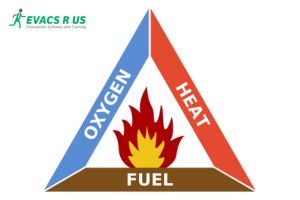
              Fire is a chemical reaction that occurs when three essential components come together, forming what is known as the Fire Triangle. These components are fuel, oxygen, and heat. Understanding the Fire Triangle is the cornerstone of fire safety and firefighting.

              Understanding the Fire Triangle

              The Fire Triangle represents the three elements that must be present for a fire to ignite and continue to burn. Remove any one of these elements, and the fire will be extinguished. Let’s delve into each of these components:

              Components of the Fire Triangle

              Fuel

              Fuel is any substance that can burn. It can be a solid, liquid, or gas. Common examples of fuel include wood, gasoline, paper, and even metals. Identifying and managing fuel sources is a critical aspect of fire prevention and safety.

              Oxygen

              Oxygen is the oxidizing agent that sustains combustion. Fires require a certain concentration of oxygen in the air to burn. Reducing the oxygen supply can be an effective way to control or extinguish a fire.

              Heat

              Heat is the energy required to initiate the combustion process. It can be in the form of a spark, flame, or even high temperatures. Controlling the heat source is essential for fire prevention and safety.

              The Role of Fire Training

              Now that we understand the Fire Triangle, it’s clear that effective fire training plays a vital role in managing and preventing fires. Firefighters, as well as individuals in various industries, receive fire training to become proficient in handling fire-related situations.

              Fire Training Procedures

              Identifying Fire Hazards

              Effective fire training begins with identifying potential fire hazards in the environment. This involves recognizing fuel sources, assessing fire risks, and taking preventive measures.

              Fire Prevention

              Preventing fires is often more critical than fighting them. Fire training emphasizes the importance of fire prevention through safe practices, proper storage of flammable materials, and the correct use of electrical equipment.

              Emergency Response

              In the event of a fire, knowing how to respond is crucial. Fire training provides individuals with the knowledge to act swiftly and efficiently during a fire emergency, reducing the risk of injury and property damage.

              The Benefits of Effective Fire Training

              Effective fire training offers numerous benefits, such as increased safety, reduced property damage, and, most importantly, saved lives. It ensures that individuals are well-prepared to respond to fire incidents, ultimately minimizing the devastating impact of fires.

              The Importance of Fire Drills

              Fire drills are an integral part of fire training. They simulate real-life fire emergencies, allowing individuals to practice their response and evacuation procedures. Regular fire drills in schools, workplaces, and residential buildings can save lives by ensuring that people know what to do in case of a fire.


              Understanding the Fire Triangle and the significance of fire training is paramount in ensuring the safety of individuals and property. By comprehending the three essential components of fuel, oxygen, and heat, and by receiving appropriate training, we can significantly reduce the risks associated with fires. Regular fire drills and proper emergency response procedures further enhance our ability to manage fire-related situations effectively.

              Remember, in the face of fire, knowledge and training are your most valuable assets. Stay safe, and always be prepared.

              Book with us

              You can book your course directly online through our online booking system. Simply pick your course, the number of people attending, and the desired dates to book a course time.
              Book Fire Suppression Image

              Book Fire Suppression

              Book Fire Warden Image

              Book Fire Warden

              Book Fire Warden Image

              Book Trial Evacuation


                Please take a note: Price is included in your Monthly Maintenance or by arrangement.

                Fire Drill Checklist for Fire Evacuation Schemes

                Fire Evacuation Scheme and fire smoke alarm

                Fire Evacuation Scheme


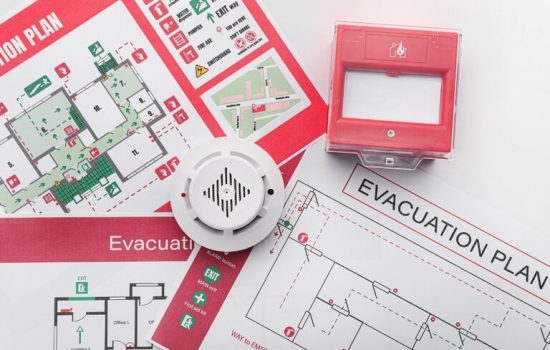
                A fire evacuation scheme is a plan that outlines the actions to take in case of a fire emergency. It helps to ensure everyone’s safety and minimise injuries and property damage. Having a well-designed evacuation scheme in place can save lives in the event of a fire. A fire evacuation scheme should be comprehensive, concise, understandable and tested regularly in the form of a fire drill.

                Fire Drill Checklist for Fire Evacuation Schemes


                A fire evacuation scheme is a critical component of any building’s safety plan. It’s essential to have an evacuation plan in place to minimize the risk of injury and loss of life in the event of a fire. One of the best ways to prepare for a fire emergency is by conducting regular fire drills. Fire drills allow individuals to become familiar with evacuation procedures and fire safety equipment such as fire alarms and extinguishers.

                To ensure the effectiveness of a fire evacuation scheme’s effectiveness, a qualified fire safety expert must conduct a thorough risk assessment. This assessment can identify potential fire hazards and evaluate the effectiveness of current fire safety measures. By entrusting the risk assessment to a qualified expert, building owners and managers can be confident that they have taken the necessary steps to prevent fires and protect their occupants in the event of an emergency.

                Fire evacuation schemes and regular fire drills are essential to a building’s safety plan. They provide an opportunity to practice emergency procedures, test fire safety equipment, and identify any weaknesses in the evacuation scheme. By regularly updating the evacuation plan and conducting risk assessments, building owners and managers can help ensure their occupants’ safety in the event of a fire emergency.

                Creating a Fire Drill Checklist


                A fire drill is an essential part of fire safety, and it helps ensure that everyone in a building knows what to do in a fire emergency. A fire drill checklist is a step-by-step guide that outlines the necessary actions to take during a fire drill. Check below a few steps to guide your next Fire Drill: 

                Step 1: Identify the Fire Drill Team

                The first step in creating a fire drill checklist is identifying the fire drill team. The fire drill team is responsible for planning, organising, and conducting the fire drill. The team should consist of members with the necessary skills, knowledge, and experience in fire safety.

                Step 2: Develop an Evacuation Plan

                The next step is to develop an evacuation plan. The evacuation plan should include the following:

                • Emergency exit routes
                • Meeting points
                • Evacuation procedures

                The evacuation plan should be clear, concise, and easy to understand. It should also be posted in visible areas throughout the building.

                Step 3: Conduct a Risk Assessment

                A risk assessment should be conducted to identify potential fire hazards in the building. The risk assessment should include the following:

                • Sources of ignition
                • Electrical hazards
                • Emergency lighting

                To ensure an accurate and thorough risk assessment, it’s important to have a qualified fire safety expert conduct the assessment. This expert should have the necessary knowledge, experience, and training to identify potential fire hazards, evaluate fire safety measures, and provide recommendations to improve the safety of the building and its occupants.

                Step 4: Train the Staff

                A qualified fire safety expert should train the staff on the evacuation plan, emergency procedures, and fire safety equipment. The staff needs to be trained to ensure their readiness in case of an emergency.

                Step 5: Conduct Regular Fire Drills

                Conduct regular fire drills to ensure that everyone in the building knows what to do in case of a fire emergency. These drills should test the evacuation plan and be conducted at different times of the day and under different conditions.

                Step 6: Evaluate and Update the Fire Drill Checklist

                To ensure the fire drill checklist is up-to-date and reflects any changes in the building’s structure or occupancy, it’s essential to evaluate and update it regularly.

                Virtual Reality Fire Drill and Evacuation Schemes


                Virtual reality (VR) fire training is becoming an increasingly popular method for training individuals in various scenarios, including fire evacuation schemes. Individuals can experience a simulated fire drill in a safe and controlled environment using virtual reality technology. This type of training can help individuals prepare for a real fire emergency and become familiar with the procedures and steps to take in the event of a fire. By incorporating virtual reality training into fire evacuation schemes, individuals can gain a better understanding of fire safety, which can ultimately save lives in the event of a real emergency.

                Book with us

                You can book your course directly online through our online booking system. Simply pick your course, the number of people attending, and the desired dates to book a course time.
                Book Fire Suppression Image

                Book Fire Suppression

                Book Fire Warden Image

                Book Fire Warden

                Book Fire Warden Image

                Book Trial Evacuation


                  Please take a note: Price is included in your Monthly Maintenance or by arrangement.

                  What is a Fire Blanket?


                  fire blanket

                  When do i use one and how do i use it?


                  When it comes to fire safety, prevention is always the best course of action. But if a fire does break out, having the right tools on hand can make all the difference. One such tool that every home or workplace should have is a fire blanket.

                  By knowing what one is when to use it, and how to use it effectively, you can help prevent small fires from turning into large disasters, keeping yourself and your loved ones safe in the event of a fire.

                  What is a fire blanket and how does it work?


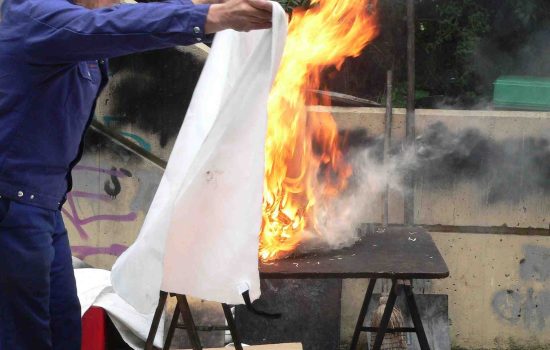
                  A fire blanket is a safety device that functions to extinguish small fires by depriving them of oxygen. Typically composed of fire-resistant materials like fibreglass, they’re designed to be placed over a burning object or material, completely covering it to cut off the supply of oxygen that the fire needs to continue burning.

                  Fire blankets are particularly effective for smothering small kitchen fires, fires involving flammable liquids, or clothing fires. They are commonly found in homes, kitchens, laboratories, and industrial settings, serving as a crucial component of fire safety equipment. It is essential to ensure they’re regularly inspected and replaced if damaged or expired to guarantee their effectiveness in emergencies.

                  When should you use one?


                  Fire blankets are most effective for small fires that are just starting to spread. Examples of situations in which they can be used include:

                  • A pan of oil catches fire on the stove
                  • A rubbish bin catches fire
                  • A person’s clothing catches fire
                  • A small electrical fire

                  It’s important to note that fire blankets are not suitable for larger fires or fires that have already spread to other objects. In these situations, it’s best to evacuate the area and call the fire department.

                  How to use a fire blanket


                  It’s a common question. Luckily, using a fire blanket is a straightforward process. It’s important to follow the correct steps to ensure that the fire is completely extinguished so you don’t put yourself in danger.

                  Step 1: Remove the blanket from its packaging

                  If the blanket is stored in a container or packaging, remove it before use. Ensure you know where the blanket is located and that it is easily accessible in case of a fire.

                  Step 2: Hold the blanket by the corners

                  When you are ready to use the blanket, hold it by the corners. This will allow you to approach the fire from a safe distance.

                  Step 3: Approach the fire slowly

                  Approach the fire slowly and carefully, making sure not to get too close to the flames. If the fire is in a pan or other container, try to slide the blanket over the top of the container to avoid splashing the flames.

                  Step 4: Cover the fire with the blanket

                  Place the blanket over the flames when you are close enough to the fire. Ensure that the entire fire is covered by the blanket, including any surrounding objects that may be on fire.

                  Step 5: Turn off any heat source

                  If the fire is caused by a heat source, such as a stove or electrical appliance, it’s important to turn off the heat source once the flames have been extinguished. This will prevent the fire from reigniting.

                  Step 6: Leave the blanket in place

                  After extinguishing the fire, leave the blanket in place for at least 30 minutes. This will ensure that the fire is completely out and that there is no risk of it reigniting.


                  Maintenance and Care


                  To ensure accessibility in case of a fire, store fire blankets in an easily reachable location. Regularly inspect them to confirm they are in good condition, free from any damages or wear and tear. If a fire blanket has been used in an emergency, replace it immediately.

                  Fire Blanket use in Virtual Reality Training


                  Virtual Reality (VR) fire training with a fire blanket is an innovative method to teach individuals to fire safety. It offers a safe, simulated environment to practice using a fire blanket. Through VR training, individuals learn to identify suitable fire types for the fire blanket, how to deploy it and use it correctly. This type of training allows individuals to practice using a fire blanket in a simulated environment without the risks and dangers associated with a real fire.

                  Using VR training with a fire blanket can improve individuals’ confidence and proficiency in using this critical fire safety device, potentially reducing the risk of injuries and property damage during a real fire emergency.

                  Book with us

                  You can book your course directly online through our online booking system. Simply pick your course, the number of people attending, and the desired dates to book a course time.
                  Book Fire Suppression Image

                  Book Fire Suppression

                  Book Fire Warden Image

                  Book Fire Warden

                  Book Fire Warden Image

                  Book Trial Evacuation


                    Please take a note: Price is included in your Monthly Maintenance or by arrangement.

                    Fire Extinguisher Types & Classes

                    Fire Extinguisher Types

                    Fire Extinguisher

                    A fire extinguisher is a portable device that can extinguish a small fire before it becomes a big one. There are different types of fire extinguishers available for different types of fires. It’s essential to understand the different classes of fire and which extinguisher type is needed for each fire type. In New Zealand, fire extinguishers must comply with the AS/NZS 1841 standard.

                    Choosing the Right Fire Extinguisher

                    Choosing the right fire extinguisher type for the fire you are dealing with is essential. Using the wrong extinguisher can make the fire worse and endanger your life. The first step in choosing the right fire extinguisher is to identify the type of fire. Once you have identified the fire class, you can choose the appropriate fire extinguisher.

                    Classes of Fire

                    There are six classes of fire, each with its own characteristics:

                    • Class A: Fires involving ordinary combustibles such as wood, paper, and plastics.
                    • Class B: Fires involving flammable and combustible liquids such as petrol, diesel, and oils.
                    • Class C: Fires involving flammable gases such as propane and methane.
                    • Class D: Fires involving combustible metals such as magnesium and sodium.
                    • Class E: Fires involving electrically energized equipment such as appliances and power tools.
                    • Class F: Fires involving cooking oils and fats.

                    Types of Extinguishers

                    There are different types of fire extinguishers available in New Zealand for different types of fires:

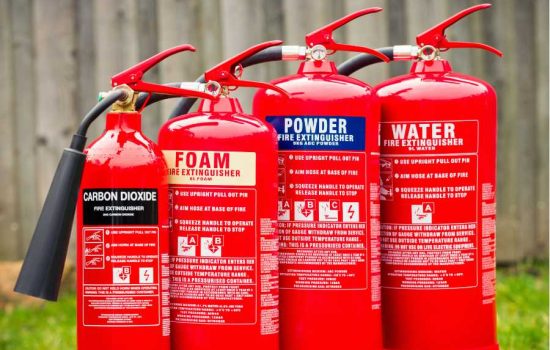
                    • Water: Suitable for Class A fires.
                    • Foam: Suitable for Class A and B fires.
                    • Wet Chemical: Suitable for Class F fires and can also be used on most other classes of fires in the home.
                    • Dry Powder (ABE): Suitable for Class A, B, C, and E fires. Not suitable for use on Class F fires.
                    • Carbon Dioxide (CO2): Suitable for Class E fires and can also be used on Class B fires.
                    • Specialised Materials for Class D fires: These are for specific metals and should be used only in those cases.

                    Fire Extinguisher Training

                    Fire extinguisher training is recommended for all individuals, especially those who work in high-risk environments. This type of training provides instruction on recognising various fire types, proper use of a fire extinguisher, and safe evacuation procedures during a fire emergency.

                    Virtual Reality Fire Extinguisher Training 

                    Virtual reality fire extinguisher training is a modern approach to teaching individuals how to use fire extinguishers in a simulated environment. This training provides a controlled and safe atmosphere to practice using different types of fire extinguishers and respond to various fire emergencies. By utilising the latest virtual reality technology, participants can gain practical experience in a realistic but secure environment. This innovative training is particularly useful for people who work in high-risk environments where fire safety is essential. The use of virtual reality technology ensures that trainees are better prepared to handle fire emergencies, reducing the risk of injury or damage to property.

                    Book with us

                    You can book your course directly online through our online booking system. Simply pick your course, the number of people attending, and the desired dates to book a course time.
                    Book Fire Suppression Image

                    Book Fire Suppression

                    Book Fire Warden Image

                    Book Fire Warden

                    Book Fire Warden Image

                    Book Trial Evacuation


                      Please take a note: Price is included in your Monthly Maintenance or by arrangement.